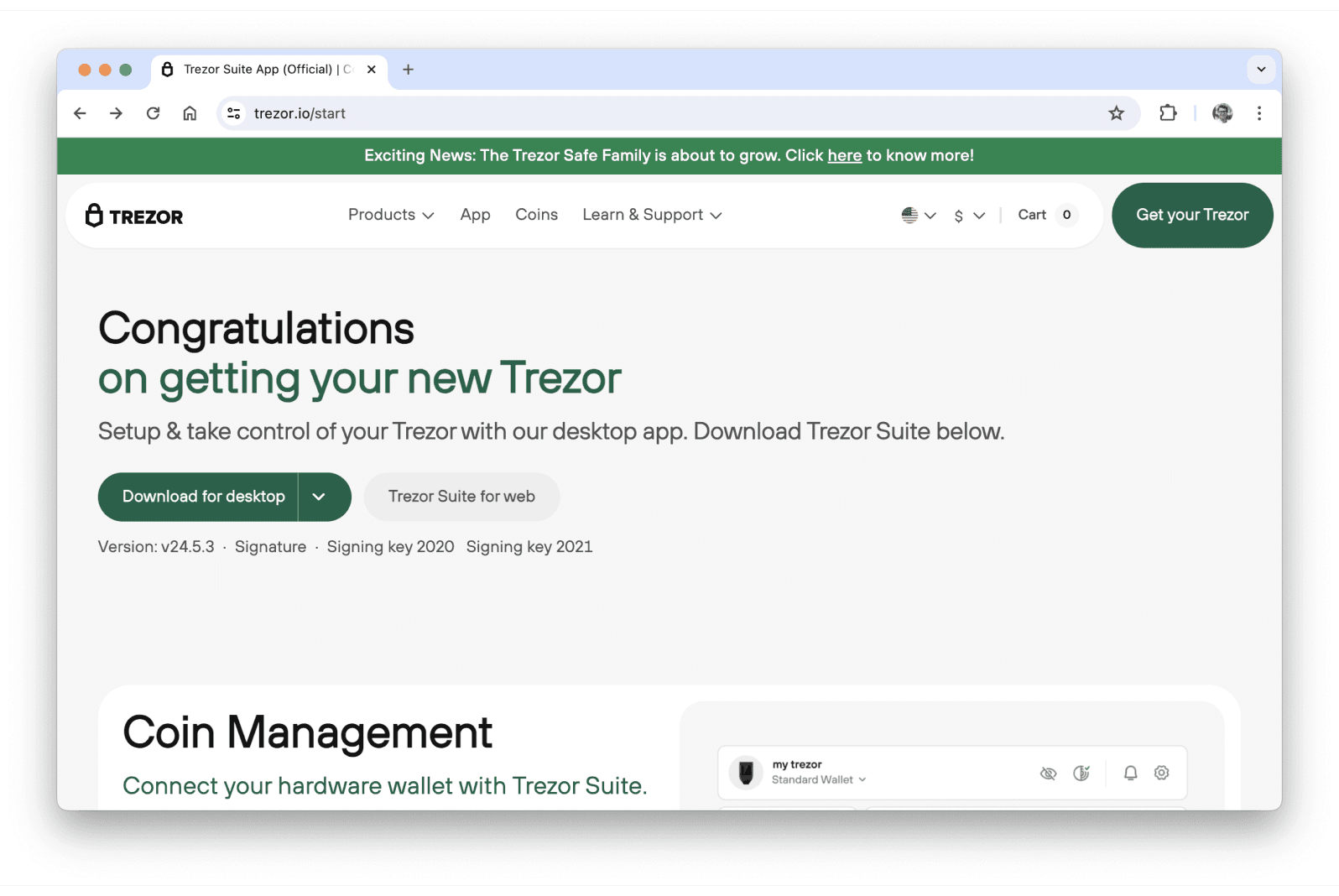
Trezor.io/start – Complete Guide to Setting Up Your Trezor Hardware Wallet
1. What Is Trezor.io/start?
Trezor.io/start is the official starting point for users who want to set up a Trezor hardware wallet for the first time. It serves as the guided onboarding environment where users initialize their device, install firmware, create security credentials, and prepare their wallet for safe cryptocurrency storage.
Rather than functioning as a login portal, Trezor.io/start is a secure setup gateway that ensures each device is genuine, uncompromised, and configured correctly before use. This step is essential for protecting digital assets from the very beginning.
2. Why Trezor.io/start Is a Critical Step
Skipping or improperly completing the setup process can compromise wallet security. Trezor.io/start exists to:
Verify device authenticity
Install trusted firmware
Generate private keys securely
Guide users through backup creation
Prevent counterfeit or tampered devices
This controlled setup environment ensures users begin with a clean, trusted, and secure wallet.
3. Who Should Use Trezor.io/start
Trezor.io/start is intended for:
First-time Trezor users
Users resetting a device
Users updating firmware on a wiped device
Individuals restoring wallets using a recovery seed
Both beginners and advanced users rely on this setup process to establish a secure foundation.
4. Devices Supported During Setup
The setup process supports:
Trezor One
Trezor Model T
Each device has slightly different interface steps, but the core setup principles remain the same.
5. Preparing for the Setup Process
Before beginning at Trezor.io/start, users should prepare:
A private and secure environment
A computer free of malware
The Trezor device and USB cable
Pen and paper for writing recovery words
Adequate time without interruptions
Proper preparation minimizes errors and security risks.
6. Connecting Your Trezor Device
The setup begins when the Trezor device is connected to a computer. Once powered on, the device enters initialization mode.
During this stage:
The device establishes secure communication
System checks confirm device integrity
Setup instructions are displayed step by step
No private data is shared during this process.
7. Firmware Installation and Verification
7.1 Why Firmware Matters
Firmware controls how the hardware wallet operates. A new Trezor device ships without active firmware to prevent supply-chain attacks.
7.2 Installing Trusted Firmware
During setup:
Official firmware is installed directly onto the device
Integrity checks verify authenticity
Installation must be confirmed physically on the device
This ensures only trusted software controls the wallet.
8. Creating a New Wallet
After firmware installation, users choose to:
Create a new wallet
Restore an existing wallet
Creating a new wallet generates entirely new private keys inside the hardware device.
9. Generating the Recovery Seed
9.1 What Is a Recovery Seed?
A recovery seed is a sequence of words that serves as the master backup for the wallet. It allows complete wallet restoration if the device is lost or damaged.
9.2 Writing Down the Recovery Words
During setup:
Words appear directly on the device screen
Users must write them down in correct order
Words are never shown again
Storing these words securely is critical.
9.3 Seed Security Guidelines
Never take photos of the seed
Never store it digitally
Never share it with anyone
Keep it in a secure, offline location
Loss of the seed means permanent loss of access.
10. Confirming the Recovery Seed
To ensure accuracy:
Users are asked to confirm random words
This verifies the seed was written correctly
The process prevents setup errors
This confirmation step is mandatory and cannot be skipped.
11. Setting Up a PIN Code
11.1 Purpose of the PIN
The PIN protects the wallet from unauthorized physical access.
11.2 How PIN Protection Works
PIN layout is randomized
Entry is resistant to spying and logging
Incorrect attempts trigger delays
This makes brute-force attacks impractical.
12. Optional Passphrase Setup
Advanced users may enable a passphrase:
Creates hidden wallets
Adds an extra security layer
Requires exact entry every time
Passphrases are never stored and cannot be recovered.
13. Completing the Setup Process
Once all steps are complete:
The wallet becomes fully operational
Accounts can be added
Funds can be received safely
The device is now ready for long-term use.
14. What Happens After Setup
After completing Trezor.io/start:
Users can manage crypto assets securely
Transactions require on-device confirmation
Private keys never leave the device
The wallet functions independently of online services.
15. Common Setup Mistakes to Avoid
Skipping recovery seed backup
Storing seed digitally
Using weak PINs
Rushing through confirmation steps
Ignoring firmware verification warnings
Avoiding these mistakes ensures long-term security.